Bio-region
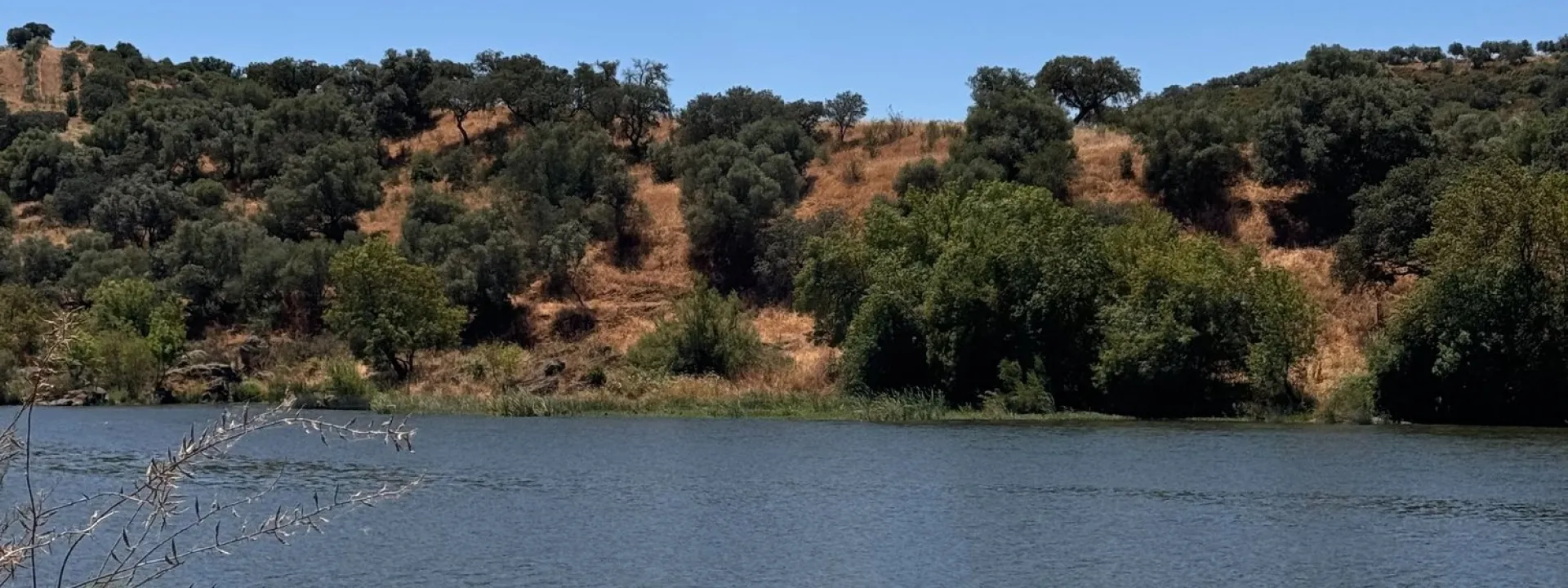
Bio-region of Margem Esquerda do Guadiana
What is a Bio-region?
A Bio-region is not an administrative but a functional geographical area, where an alliance is established between farmers, citizens, tourism operators, associations, and public administrations for the sustainable management of resources. This synergy is based on the principles and practices of organic production and consumption (short supply chains, organized supply and demand groups, quality restaurants, organic canteens). In a Bio-region, the promotion of organic products is intrinsically linked to the promotion of the territory and its particular features, in order to achieve the full development of the economic, social, and cultural dimensions” (Basile, S., 2014, p.4).
Bio-regions pursue objectives related to the enhancement of territorial assets such as high-quality local production, landscape, biodiversity, and other heritage/cultural elements; the transition of traditional agri-food chains to organic; the promotion of renewable energy use and energy cost reduction; the promotion of the circular economy; training/awareness-raising as well as research—these are also encompassed within their goals.
Currently, there are around fifty Bio-regions in Europe, spread across Portugal, Spain, France, Italy, Austria, Germany, Switzerland, Poland, and Slovakia. In Portugal, the first Bio-region was the municipality of Idanha-a-Nova, followed by the Comunidade Intermunicipal do Alto Tâmega (municipalities of Boticas, Chaves, Montalegre, Ribeira de Pena, Valpaços, and Vila Pouca de Aguiar) and São Pedro do Sul.
Bio-region of Margem Esquerda do Guadiana
The territory of Margem Esquerda do Guadiana (municipalities of Mourão, Barrancos, Moura, Serpa and Mértola) constitutes the fourth Bio-region of Portugal, created in October 2019. Its genesis is linked to theGrupo de Ação Local da MEG (Gal MEG), an entity composed of 34 partner organizations, responsible for implementing the Programa de Desenvolvimento Local de Base Comunitária in the municipalities of Mourão, Barrancos, Moura, Serpa and Mértola. The decision regarding its creation was made at a meeting of the GAL management body on December 5, 2018. On October 25, 2019, at CADES in Serpa, the session marking the adhesion of the Margem Esquerda do Guadiana (MEG) to the Rede Internacional de Bio-regiões (IN.N.E.R.) took place.
The Bio-region in figures
639 organic operators
In 2023, 21% more than in 2022: Moura 238, Serpa 150, Mértola 110, Barrancos 102 and Mourão 39. Source: DGADR
41,743 ha under organic farming
Plus 39,487 ha in conversion (2023). In Barrancos, 76% of that land is already organic; in Serpa, 29%. Source: DGADR
131 organic farms
In the 2019 Agricultural Census: Moura 51, Barrancos 30, Serpa 24, Mértola 16 and Mourão 10, mostly with permanent crops and pastures. Source: INE
Over half the land classified
Natura 2000 sites, special protection zones and protected areas cover over half of four of the five municipalities, and all of Barrancos. In Serpa, 13.8%. Source: INE
37,010 inhabitants
In 2021, 10 inhabitants per km²: from 1,438 in Barrancos to 13,757 in Serpa. Mértola is the least densely populated municipality (5 per km²) and Moura the most (14). Source: INE
31 rural tourism establishments
Rural and country house tourism, mostly in Mértola (12), followed by Moura (8), Serpa and Mourão (5 each) and Barrancos (1). There are also 18 local accommodation units and 9 hotels. Source: INE, 2024
Objectives of Intervention
Raise awareness about the importance of consuming organic products, particularly through the valorization of existing outstanding Bio examples and the progressive establishment of one or more sustainable food systems;
Encourage the transition to organic practices in traditional agri-food production, processing, and supply chains;
Develop training and research;
Reduce the territory’s energy consumption and progressively cover local energy needs through local renewable energy production;
Generate employment within eco-value chains;
Position the territory at both national and international levels;
Develop cooperation networks within the territory as well as at national and international levels.
Strengthening the network of organic producers
Local and beyond-local economic promotion of organic products and services
Strategic Areas of Intervention
Image and promotion of the Bio-region
Education
Leadership and governance
Cooperation
Founding Entities of the MEG Bio-region
This founding core approved an internal regulation on October 25, 2019, which, in addition to establishing governance bodies, envisages the participation of various stakeholders from agriculture, tourism and culture, civil society, education, the social sector, local development, and local or regional public authorities.
• CCBIO- Centro Competências para a Agricultura Biológica
• AGROBIO – Associação Portuguesa Agricultura Biológica
• INIAV, IP- Instituto Nacional de Investigação Agrária e Veterinária
• Município de Barrancos
• Município de Mourão
• Município de Moura
• Município de Mértola
• Município de Serpa
• Rota do Guadiana-ADI
Related and Ongoing Projects
- GIAHS: Globally Important Agricultural Heritage Systems
- Partnerships for Non-Urban Cohesion
Useful links
Co-funded by


Left Bank of the Guadiana Bio-region
Be part of this process!
Build the future with us! get in touch.